
Chasing The Stars From Northern Arizona: Drew Evans
Explore Drew's astrophotography journey, the dark skies of NAZ Observatory, and the equipment, techniques, and discoveries behind his images.
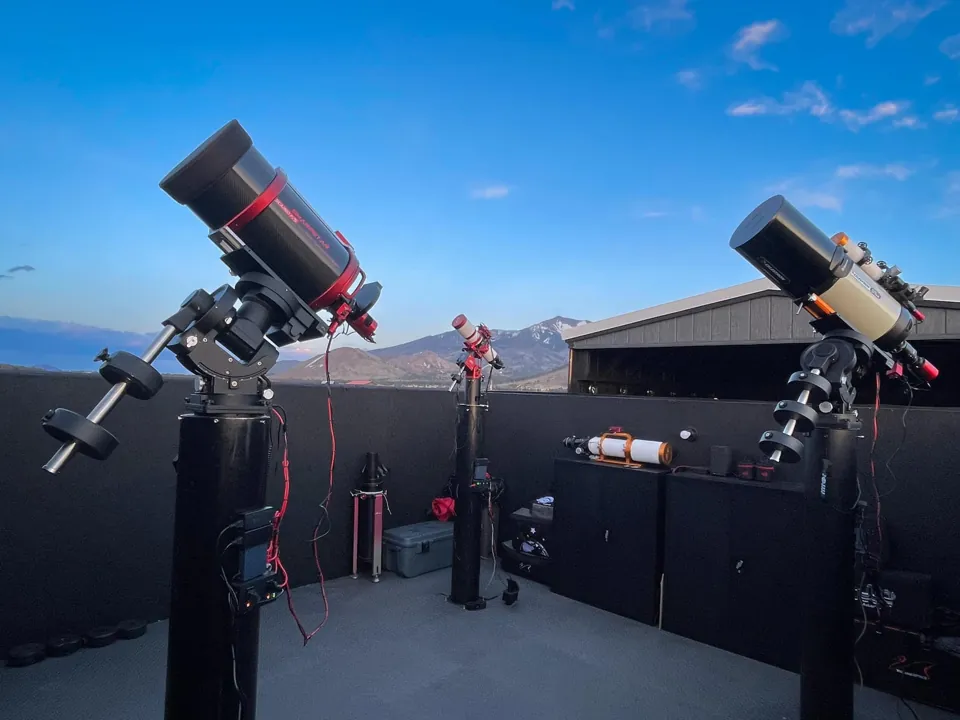
Read the featureSituated in pristine Bortle 2 night skies of Northern Arizona, NAZ Observatory incorporates an 18'x18’ electronic roll-off roof, which can be accessed remotely to image from anywhere. The very low humidity and 8000 feet elevation makes astrophotography ideal at this location.
A most recent SQM (Sky Quality Meter) reading of 21.93 mag/arcsec² indicated an exceptionally dark, pristine night sky. This value is close to the theoretical limit of natural darkness on Earth (around 22.0).
Custom built in 2021 and owned by astronomer/astrophotographer Drew Evans, NAZ Observatory incorporates 3 permanent piers allowing amazingly dark skies from horizon to horizon, showing bright unobstructed stars.
Equipment ranges from several refractors, SCTs, reflectors, and camera lenses ranging from 14mm to 2800mm. I also test for several major astro manufacturers due to the dark skies I have, which I provide results and input on their new gear before distribution.
Loading latest images…
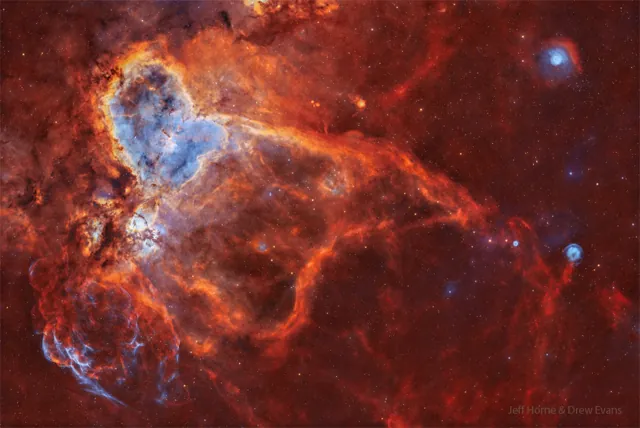
A deep view captured over 57 nights reveals the Heart and Fishhead nebulae amid faint, intricate filaments of glowing gas.
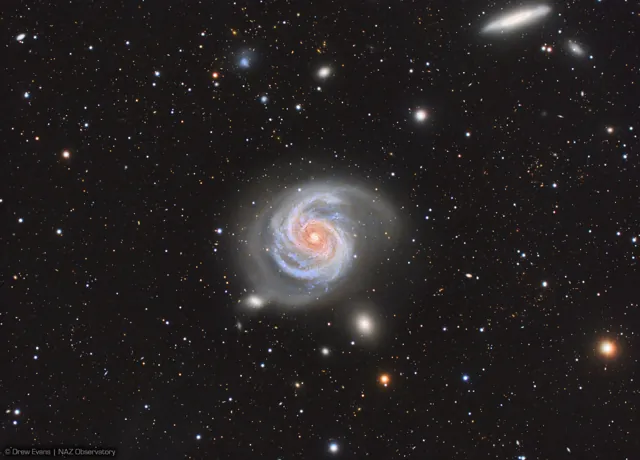
A 21-hour exposure near Flagstaff reveals M100's sweeping spiral arms, blue star clusters, and dust lanes, 56 million light-years away.
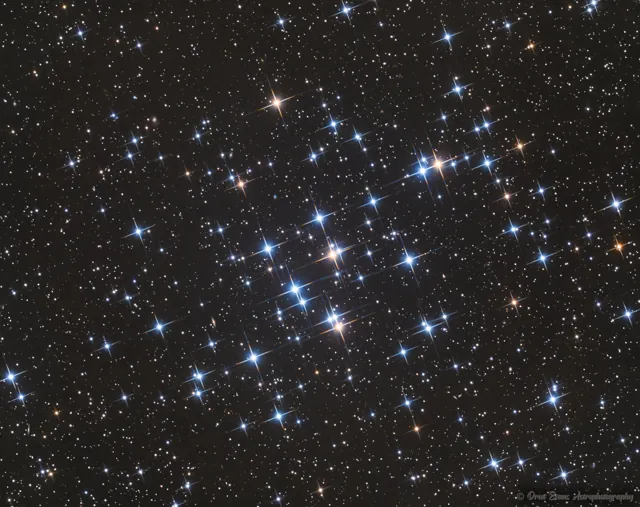
Some 600 light-years away in Cancer, the Beehive Cluster showcases bright blue stars and cooler yellowish giants.
Explore Drew's astrophotography journey, the dark skies of NAZ Observatory, and the equipment, techniques, and discoveries behind his images.
Read the feature
Discover Drew's wide-field and deep-sky imaging from NAZ Observatory, his collaboration with William Optics, and a gallery of nebulae, galaxies, and star clusters captured with their telescopes.
Read the feature
Drew shares the story behind his ASIWEEK-winning Trifid Nebula image, his remote observatory and ZWO equipment, and advice for fellow astrophotographers.
Read the feature
An interview with Drew about capturing the Butterfly Nebula, his imaging equipment, and the processing techniques behind its intricate detail.
Read the feature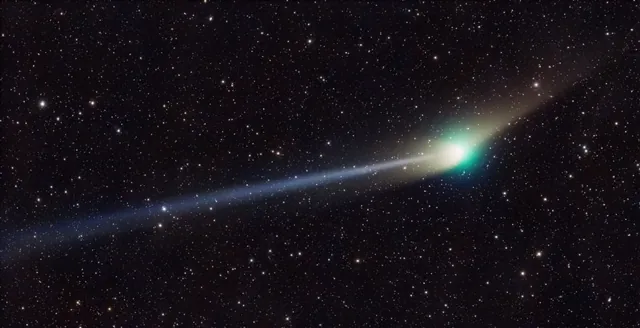
A comet image processed by Adam Block using seven hours of data captured by Drew with a William Optics SpaceCat 51 and ZWO ASI2400MC Pro.
View the image
A guide to Bode’s Galaxy and the Cigar Galaxy featuring Drew’s wide-field image and the equipment used to capture this dusty region.
Read the feature
Drew joins the Light Pollution News conversation about light pollution, dark skies, and the changing relationship between artificial light and the natural world.
Listen to the episode
A conversation about Drew’s astrophotography journey, his move to Flagstaff’s dark skies, and the remote observatory and equipment behind his images.
Listen to the episode
Explore Drew’s astrophotography featured on AAPOD2, including nebulae, galaxies, and other views of the night sky.
View the features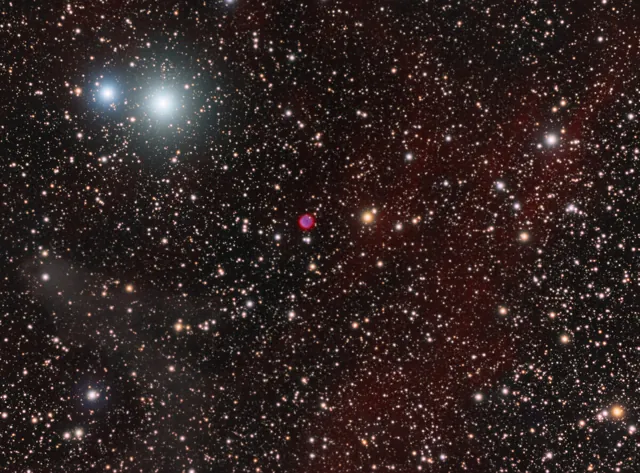
Astronomy features a likely planetary nebula discovered by Drew Evans, Jeffrey Horne, Brian Fulda, and Jaša Rebula. Nicknamed Sam's Nebula in honor of Drew's late father, it appears in an image captured over 41.3 hours.
Read About the Discovery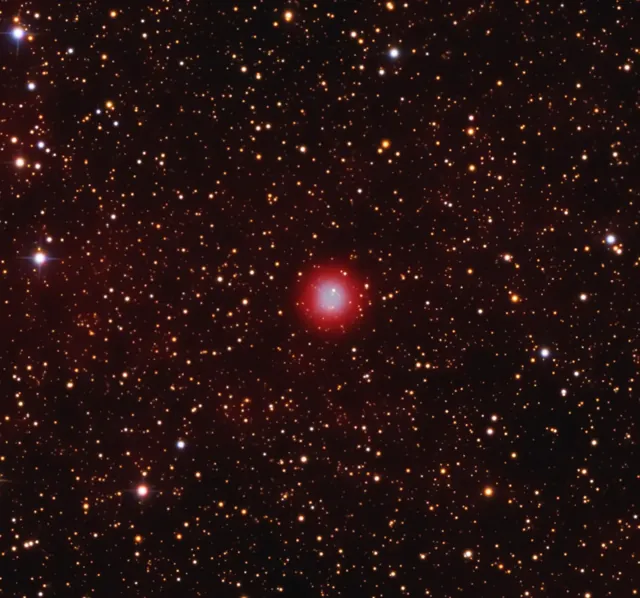
The story of planetary nebula candidate HorFulEvReb 2, discovered by Jeffrey Horne, Brian Fulda, Drew Evans, and Jaša Rebula. Named in honor of Jeff's late father, Don's Nebula was imaged in greater detail from NAZ Observatory.
Read About the Discovery
Visiting from near or far? Leave a note for NAZ Observatory.